The Codex Regius of the Poetic Edda (Poetic Edda)
Also called: Codex Regius, Elder Edda, Sæmundar Edda, GKS 2365 4to
Around the 1270s a manuscript collecting old poems of gods and heroes, the Codex Regius, was written in Iceland. It is almost the only source of the Poetic Edda — Völuspá, Hávamál and the rest. Bishop Brynjólfur of Skálholt acquired it in 1643 and sent it to the Danish king; it returned to Iceland in 1971.
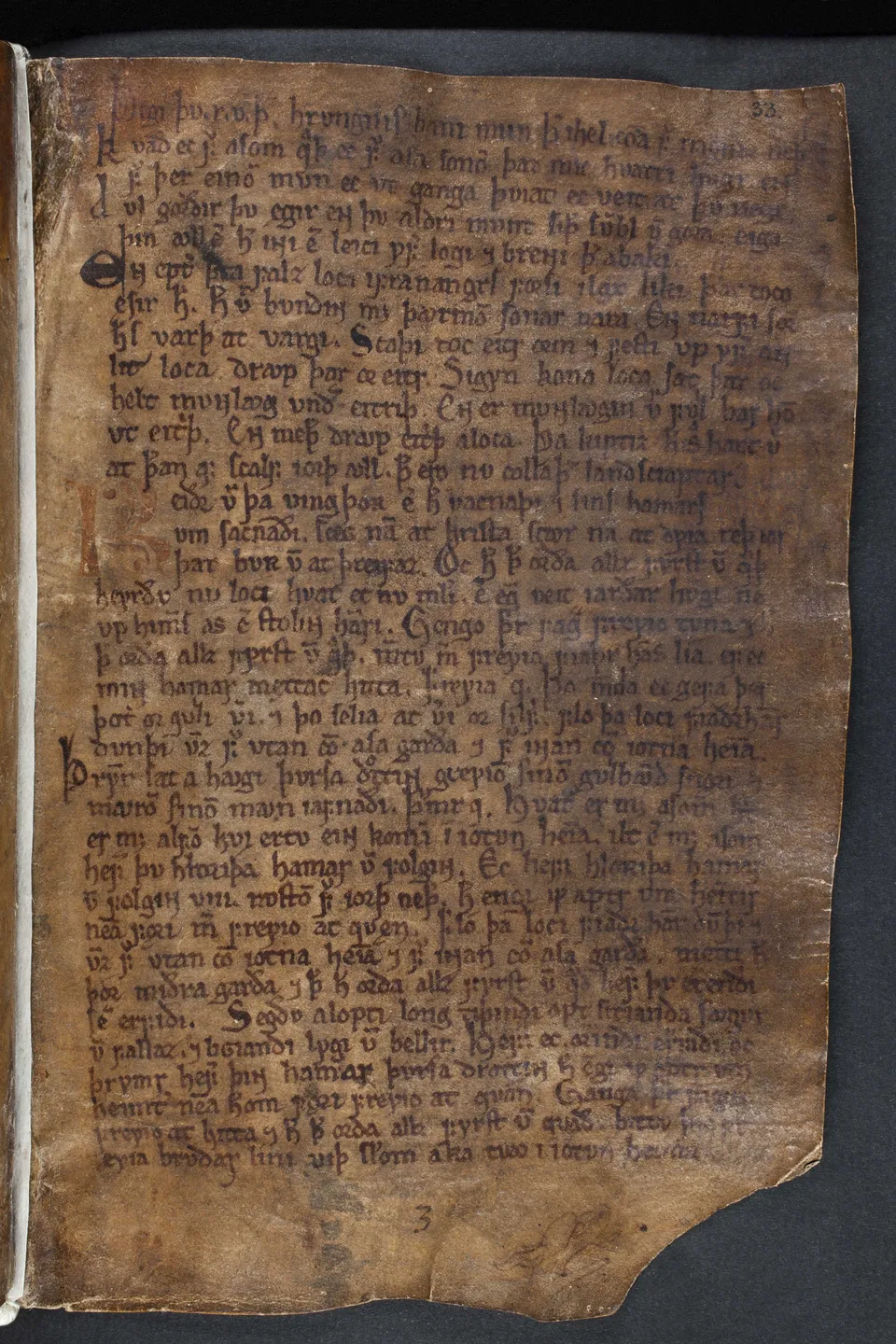
Thorsteinn1996 · CC BY-SA 4.0 · Source
The Codex Regius (GKS 2365 4to) is a vellum manuscript written by an unknown scribe in Iceland around the 1270s; 45 leaves survive. It contains the mythological poems Völuspá, Hávamál, Vafþrúðnismál, Grímnismál, Hymiskviða, Lokasenna, Þrymskviða and others, and heroic poems of Sigurd, Brynhildr and Guðrún. Most of the poems now called the Poetic Edda survive only in this one book, and many are thought to have been composed long before, in the Viking Age. Eight leaves are missing from the Sigurd poems — the “great lacuna”.
In 1643 Brynjólfur Sveinsson, bishop of Skálholt, acquired the manuscript and, believing it compiled by the 11th-century scholar Sæmundr the Learned, called it Sæmundar Edda (a view no longer accepted). In 1662 he sent it to King Frederick III of Denmark, which gave it the name Codex Regius, “the King’s Book”. It remained in the Royal Library in Copenhagen for over three centuries.
After Iceland’s independence, calls grew for the return of Icelandic manuscripts held in Denmark. Denmark agreed, and on 21 April 1971 the Codex Regius arrived in Reykjavík aboard a naval vessel together with Flateyjarbók, greeted by large crowds at the harbour. It is now kept by the Árni Magnússon Institute for Icelandic Studies in Reykjavík.