Chaos, Gaia and Uranus
Also called: Chaos, Gaia, Uranus, Ouranos, Greek creation myth
A legend handed down over the centuries.
A Greek myth told in Hesiod’s Theogony. First came Chaos (the Gap), then Gaia the Earth, Tartarus and Eros. Uranus, the Sky born of Gaia, imprisoned his children inside the earth until his youngest son Cronus overthrew him.
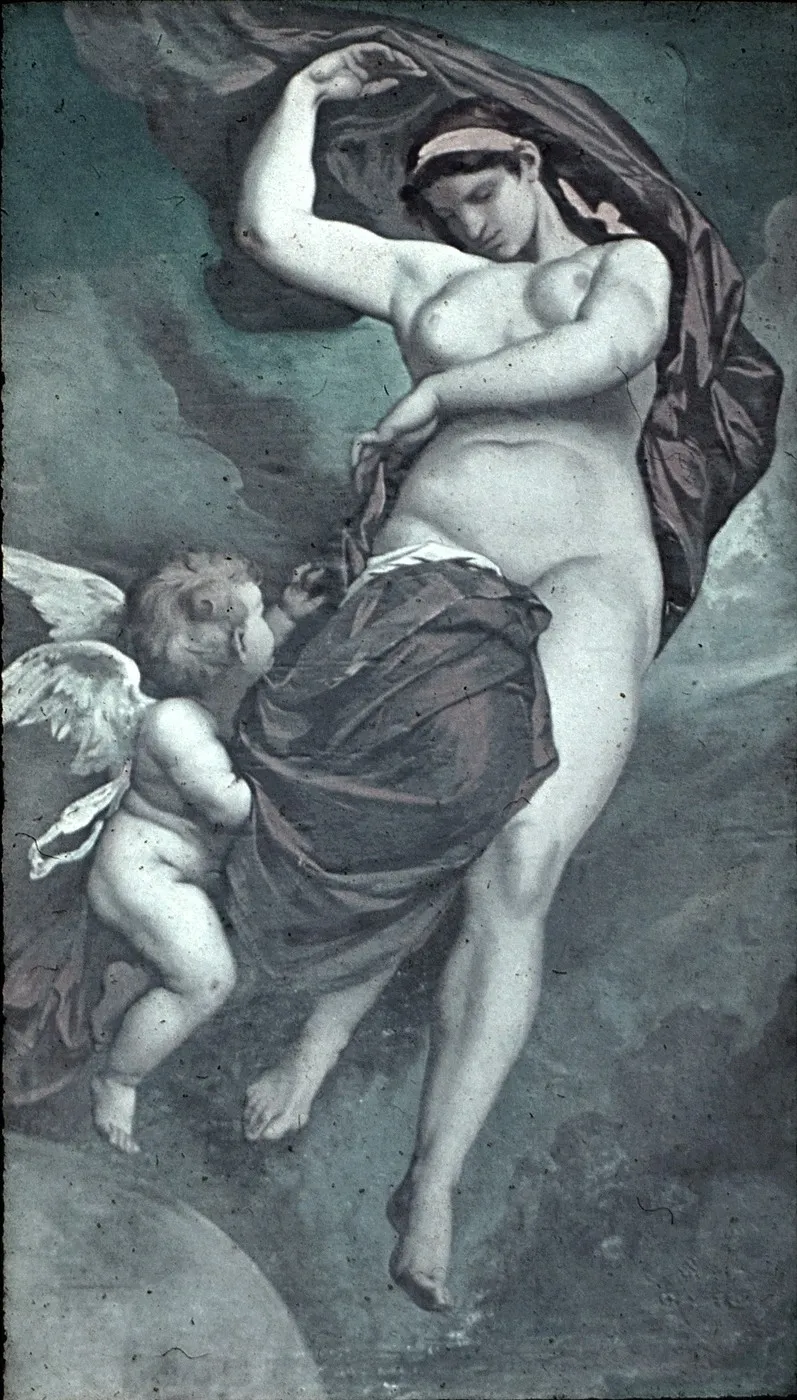
Anselm Feuerbach · Public domain · Source
This Greek myth is told in Hesiod’s Theogony, of about 700 BC. First of all came Chaos — later rendered “disorder”, but originally a “yawning gap”. Then came broad-breasted Gaia, the Earth; Tartarus in the depths below; and Eros, fairest of the gods. From Chaos came Erebus, the Darkness, and Nyx, the Night. Gaia by herself bore starry Uranus, the Sky, to cover her, as well as the mountains and the sea.
From Gaia and Uranus were born the twelve Titans, the three one-eyed Cyclopes and the three Hundred-Handers. Uranus hated his children and kept them hidden in Gaia’s body; in her pain Gaia made a sickle of adamant and asked her children for revenge. The youngest Titan, Cronus, castrated his father with it, and from the foam where the flesh fell into the sea Aphrodite was born, the Theogony sings. This pattern of “kingship in heaven”, in which a son overthrows his father and is overthrown in turn, closely resembles the Hittite Song of Kumarbi, and many scholars see Near Eastern influence in it.