Sugar Plantations in Brazil
Also called: Plantation economy, Engenho
The Portuguese opened sugar plantations worked by African slaves in northeastern Brazil; by the early 17th century Brazil was the world’s largest producer of sugar.
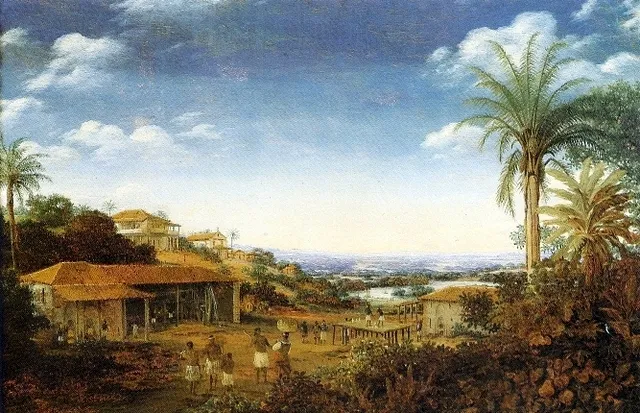
Frans Post · Public domain · Source
From the mid-16th century the Portuguese set up sugar plantations and mills (engenhos) in Pernambuco and Bahia in northeastern Brazil. They used native labour at first but soon bought slaves from Africa, establishing the plantation — the large-scale cultivation of a single crop. The Dutch, who held the region in 1630–1654, carried the techniques of sugar making to the Caribbean when they were expelled, and Barbados, Jamaica and Saint-Domingue became new sugar islands. In Europe sugar turned from a luxury into an everyday good.