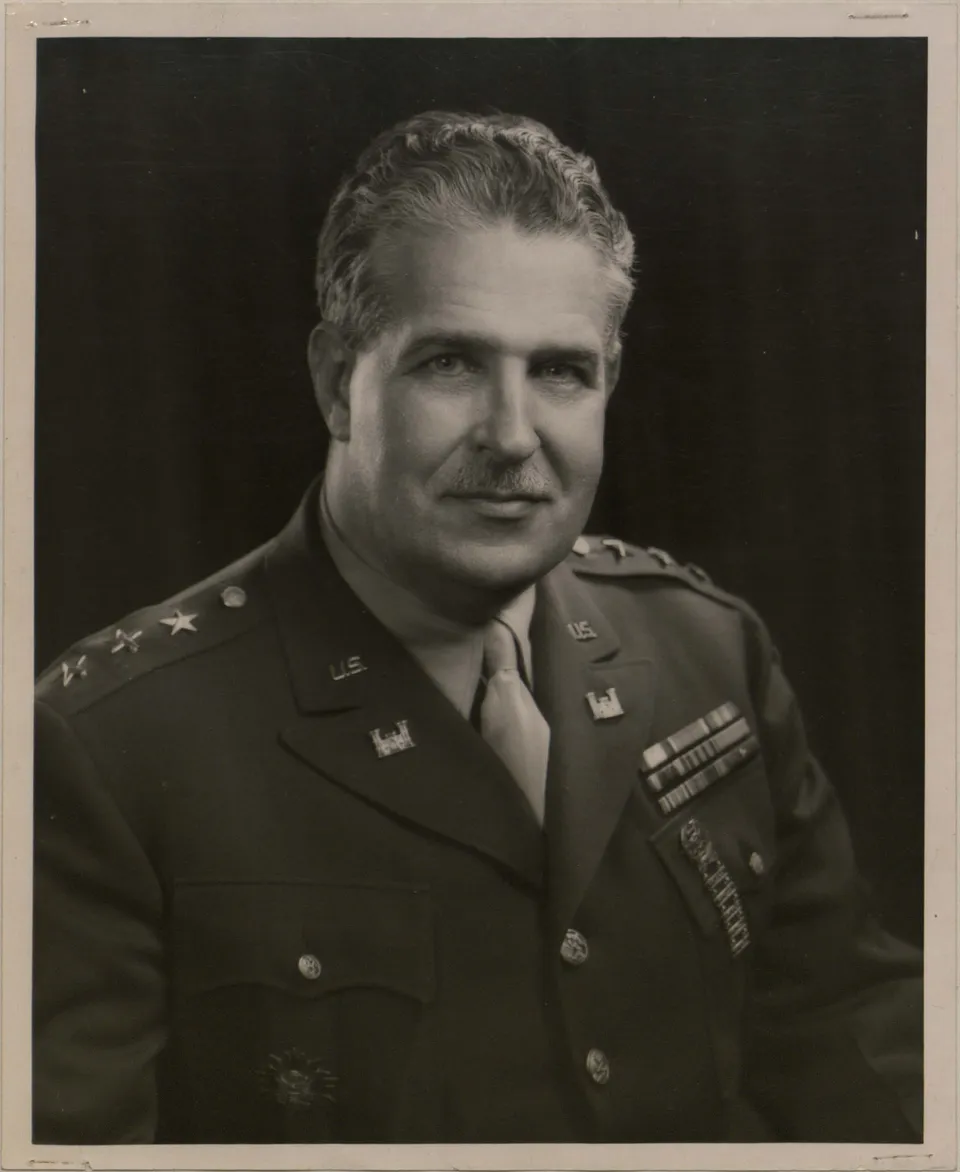
U.S. Army · Public domain · Source
Person1896 – 1970
Leslie Groves
US Army general who oversaw the building of the Pentagon and from 1942 commanded the whole Manhattan Project
U.S. Army · Public domain · Source
US Army general who oversaw the building of the Pentagon and from 1942 commanded the whole Manhattan Project
The secret programme in which the United States, with Britain and Canada, built the atomic bomb. Under General Groves from 1942 it raised secret cities at Oak Ridge, Hanford and Los Alamos, employing over 130,000 people at a cost of some $2 billion.
In 1943 a secret laboratory to design the atomic bomb was founded on a remote mesa at Los Alamos, New Mexico. Oppenheimer, its director, gathered leading scientists including Fermi and Bohr.
Before dawn on 16 July 1945 the world’s first atomic bomb was tested successfully in the New Mexico desert. The mushroom cloud rose 12 kilometres, and Oppenheimer recalled a line from Hindu scripture: "Now I am become Death, the destroyer of worlds."
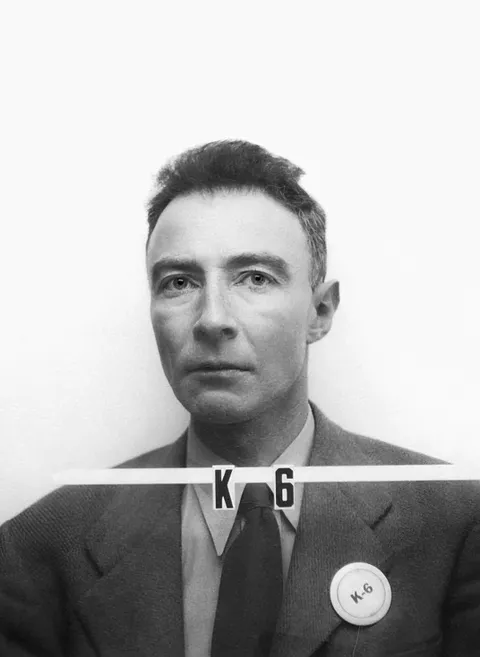
American physicist who directed the Los Alamos laboratory and led the building of the atomic bomb — the "father of the atomic bomb" — and after the war opposed the hydrogen bomb
32nd US president (1933–1945) who led the New Deal and took the US to war after Pearl Harbor; he attended the Cairo and Yalta conferences
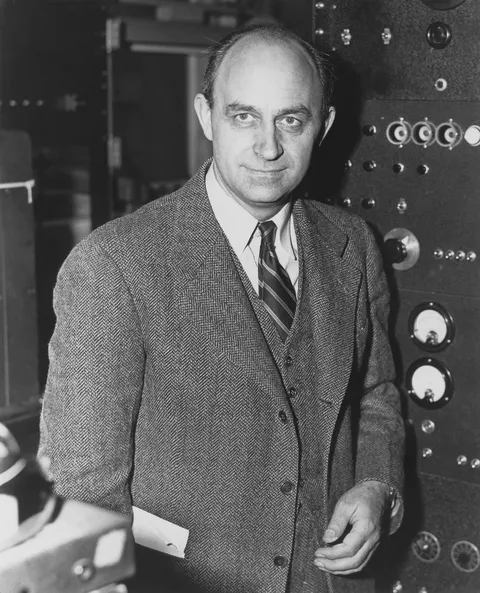
Italian-born physicist who, after receiving the 1938 Nobel Prize in Physics, emigrated to the US and achieved the first chain reaction with the world’s first reactor in Chicago in 1942
33rd US president (1945–1953) who ordered the atomic bombings, set the policy of containment with the Truman Doctrine and sent US forces to the Korean War
From the discovery of fission to the first Soviet bomb — Einstein’s letter, the Manhattan Project, the Trinity test, Hiroshima and Nagasaki, and the dawn of the nuclear age