Yggdrasil and the Nine Worlds
Also called: Yggdrasill, World Tree, Nine Worlds, Midgard, Asgard
A legend handed down over the centuries.
The Norse picture of the cosmos, told in Völuspá, Grímnismál and the Prose Edda. The giant ash tree Yggdrasil stands at the centre of the world, linking Asgard of the gods, Midgard of men, Jotunheim of the giants and other worlds.
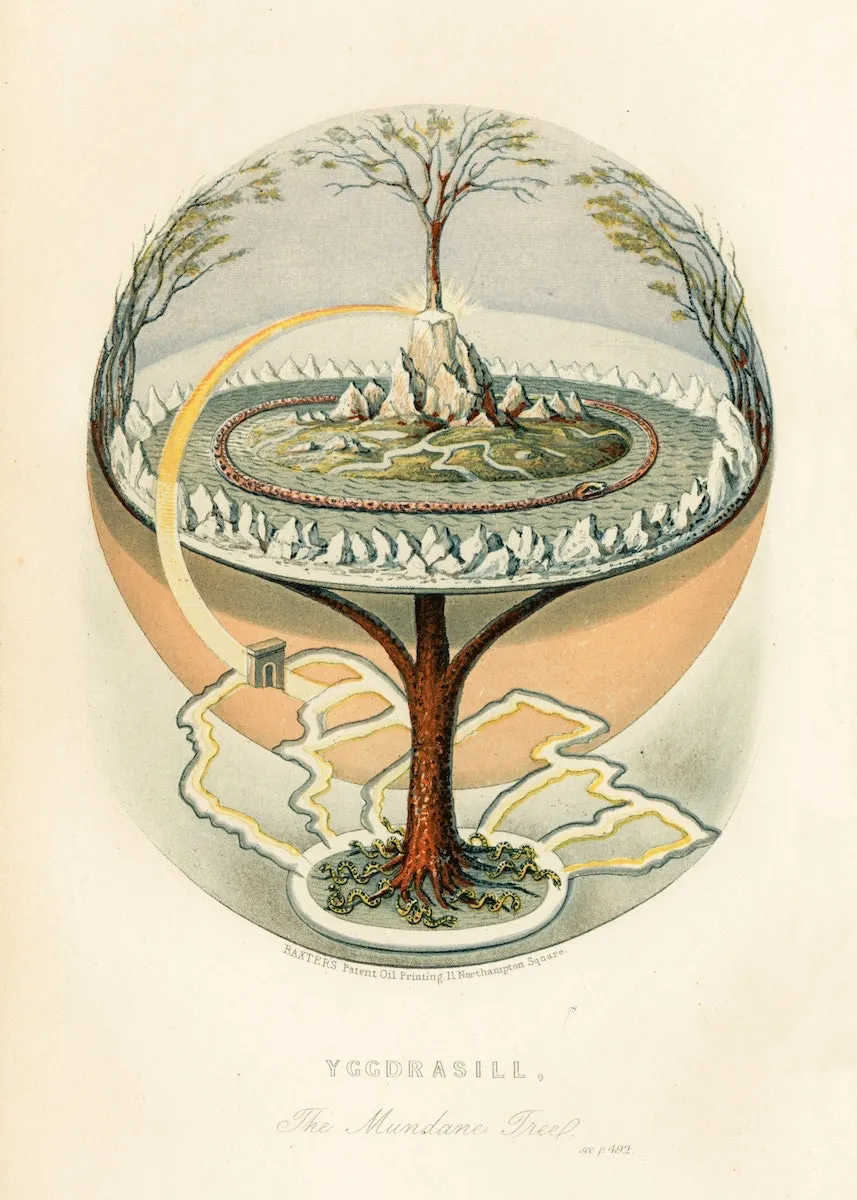
Oluf Bagge · Public domain · Source
This Norse picture of the cosmos is told in the Eddic poems Völuspá and Grímnismál and in Gylfaginning of Snorri’s Prose Edda. Yggdrasil is an evergreen ash of immense size whose branches spread above the heavens and whose three roots reach to Asgard, the world of the gods, to the land of the frost giants, and to misty Niflheim. Beside its roots lie the Well of Urðr, tended by the Norns who shape fate, Mímir’s well of wisdom, and the seething spring Hvergelmir.
An eagle sits at the top of the tree and the dragon Níðhöggr gnaws its roots, while the squirrel Ratatoskr runs up and down carrying insults between them. Deer bite its leaves and the tree suffers, but the Norns keep it alive with water from their well. Every day the gods gather beneath it to hold court.
Völuspá (stanza 2) speaks of “nine worlds”, but no ancient source lists them. The familiar list — Asgard, Midgard, Jotunheim, Vanaheim, Alfheim, Niflheim, Muspelheim and so on — is a modern reconstruction.