Unrestricted Submarine Warfare and US Entry into the War
Also called: Zimmermann Telegram, Sinking of the Lusitania
When Germany declared that its submarines would sink without warning any ship in the waters around Britain, the neutral United States declared war on Germany — a turning point that secured the Allied victory.
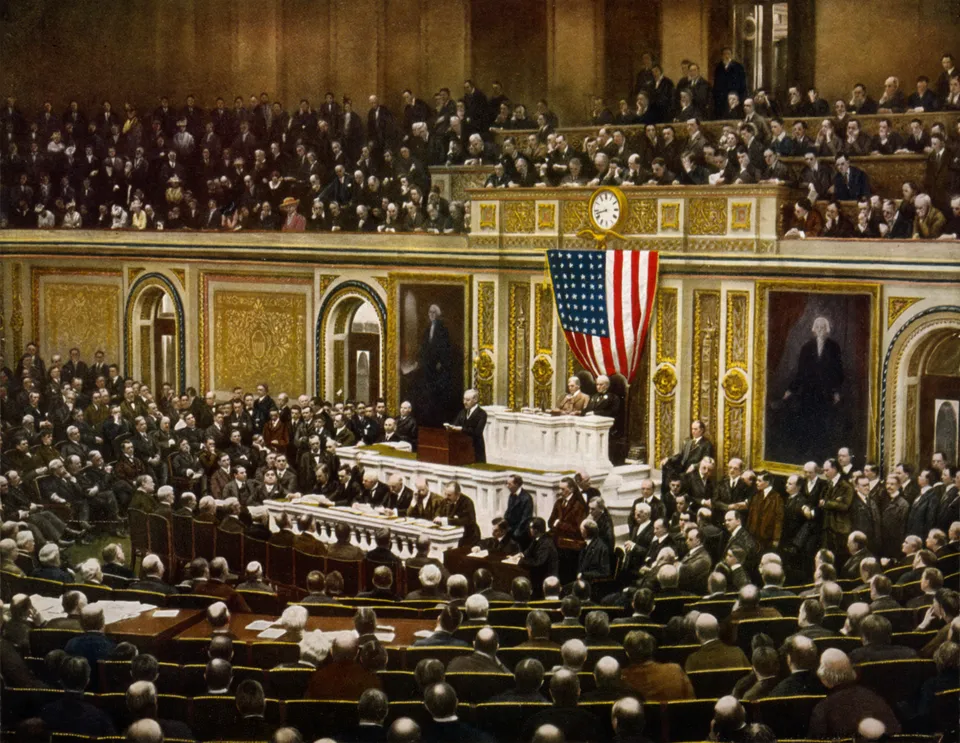
Unknown author · Public domain · Source
Short of food and raw materials under the British blockade, Germany struck back with submarines. When the British liner Lusitania was sunk in May 1915, killing over a thousand people including more than 120 Americans, US opinion was inflamed and Germany scaled back its attacks for a time.
But on 1 February 1917 Germany resumed unrestricted submarine warfare, attacking even neutral ships without warning in the hope of starving Britain into surrender. When the Zimmermann Telegram, in which the German foreign minister offered Mexico an alliance, was also revealed, Congress declared war on Germany on 6 April at President Wilson’s request.
The United States supplied the Allies with money and materials and by the summer of 1918 had sent more than a million troops to France. Coming as revolutionary Russia was leaving the war, American entry gave the Allies decisive strength and marked the beginning of America’s central role in world politics.