Soviet–Afghan War
Also called: Soviet invasion of Afghanistan
The Soviet Union sent troops to prop up Afghanistan’s communist regime and fought for nearly ten years against mujahideen backed by the US and others before withdrawing in 1989. Détente was over.
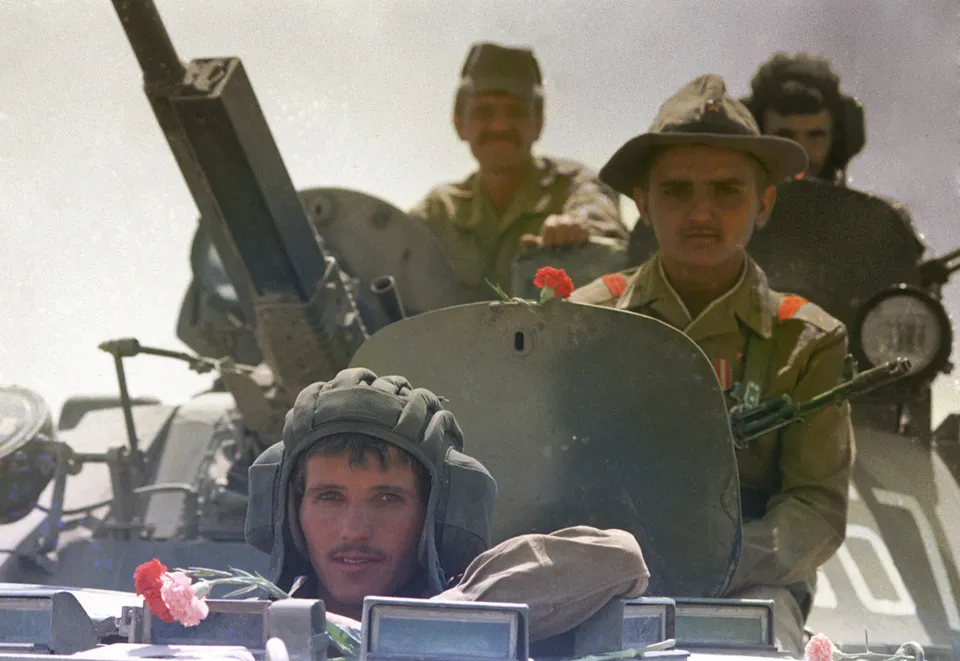
V. Kiselev / В. Киселев · CC BY-SA 3.0 · Source
When the communist regime that had seized power in a 1978 coup was shaken by Islamic rebellion and infighting, the Soviet Union sent troops in December 1979 and installed a new leader. The US halted grain sales, boycotted the 1980 Moscow Olympics and supplied weapons through Pakistan to the mujahideen; the Soviet bloc boycotted the 1984 Los Angeles Olympics in turn.
Bogged down in mountain guerrilla warfare, the Soviets lost nearly 15,000 dead, and by common estimates around a million Afghans died and millions became refugees. Gorbachev completed the withdrawal in February 1989. The war drained Soviet strength, and the chaos it left behind fostered the rise of the Taliban and al-Qaeda.