PoliticsAD 641

The Rise of Tibet and Princess Wencheng

Also called: Tibetan Empire

Songtsen Gampo, who had united the Tibetan plateau, married the Tang Princess Wencheng in 641. He ruled from Lhasa and brought Buddhism and a Tibetan script to his realm.
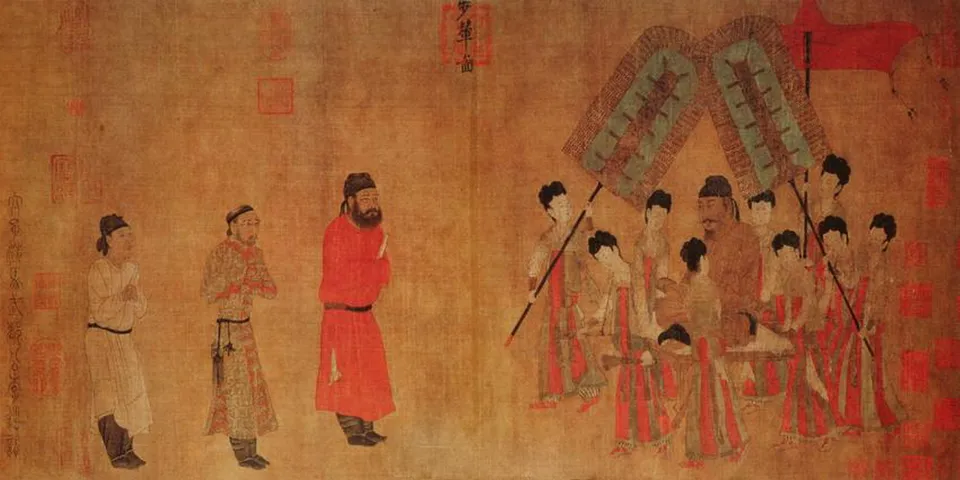
Bunian Tu — Taizong receiving Gar, the Tibetan envoy who came for Princess Wencheng (attributed to Yan Liben)

Yan Liben · Public domain · Source

In the early 7th century Songtsen Gampo united the clans of the Tibetan plateau into the Tibetan Empire and made Lhasa his capital. After fighting the Tang and demanding a marriage alliance, he received Princess Wencheng, a kinswoman of Taizong, in 641, and is said to have taken a Nepali princess as well. Buddhism came in with the two queens and the Jokhang temple was founded, and a Tibetan script based on an Indian one is said to have been created.

Tibet went on to threaten the Tang west; in 763, after the An Lushan Rebellion, it even occupied Chang’an briefly. Sources differ on Songtsen Gampo’s dates of birth and death.

The map in AD 641

OpenFreeMap © OpenMapTiles © OpenStreetMap contributors

States and rulers at the time
Tibetan Empire
Places
Lhasa

People

  • Songtsen Gampo

    monarch · King of the Tibetan Empire who united the Tibetan plateau in the early 7th century, made Lhasa his capital, married the Tang Princess Wencheng and introduced Buddhism and the Tibetan script

Before and after

Themes that include this event

  • Sui, Tang and the East Asian WorldAD 317 – AD 979

    From the divided Southern and Northern Dynasties and the Gupta age through the Sui and Tang empires to the founding of the Song — the age when an East Asian world sharing law codes, Buddhism, Confucianism and Chinese characters took shape, and Korea and Japan built their states on its model