Politicsc. 2nd century BCE – 4th century
The Three Han — Mahan, Jinhan and Byeonhan
South of the Han River the small states of Mahan, Jinhan and Byeonhan formed confederations, led by the ruler of Mokji in Mahan.
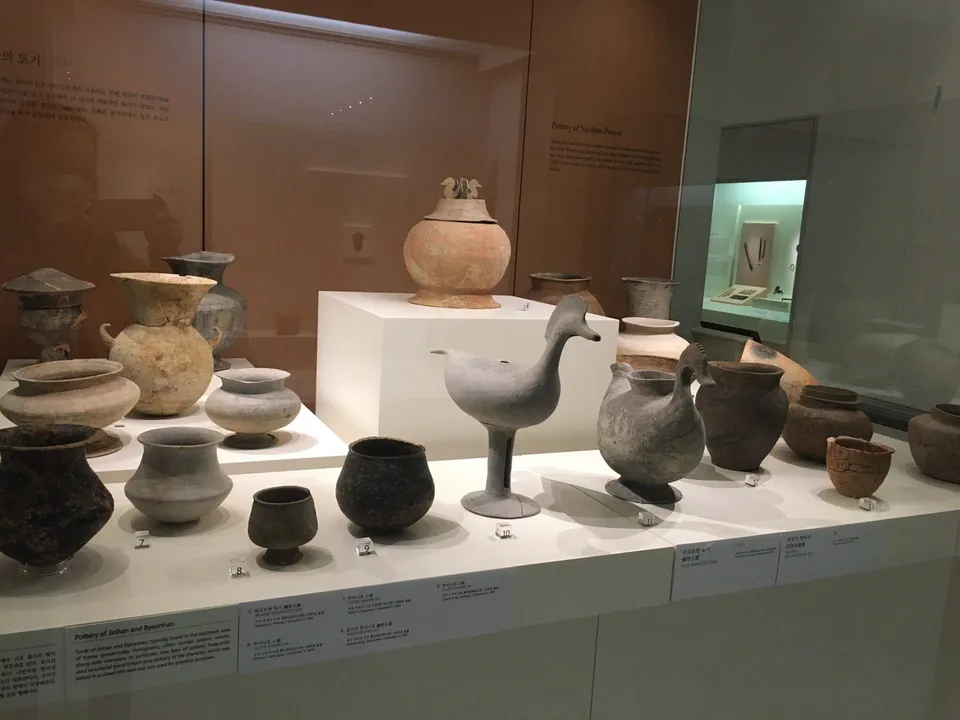
Lightbearer03 · CC BY-SA 4.0 · Source
Refugees from Gojoseon brought iron to the southern state of Jin, from which the Three Han emerged: 54 states in Mahan and 12 each in Jinhan and Byeonhan, ruled by chiefs called sinji or eupcha according to size.
Alongside the political chiefs, a priest (cheongun) ruled a sacred precinct, sodo, where even criminals could not be seized. Festivals were held in the fifth and tenth months, and Byeonhan exported iron to Lelang and Wa and used it like money.
Mahan's Baekje state later grew into Baekje, Jinhan's Saro into Silla and Byeonhan's Guya into Geumgwan Gaya.