Paris Commune
Also called: Bloody Week, Commune of Paris
A self-governing city government set up by the people and workers of Paris against the government that had surrendered to Prussia. It was crushed after two months, and huge numbers died in the “Bloody Week”.
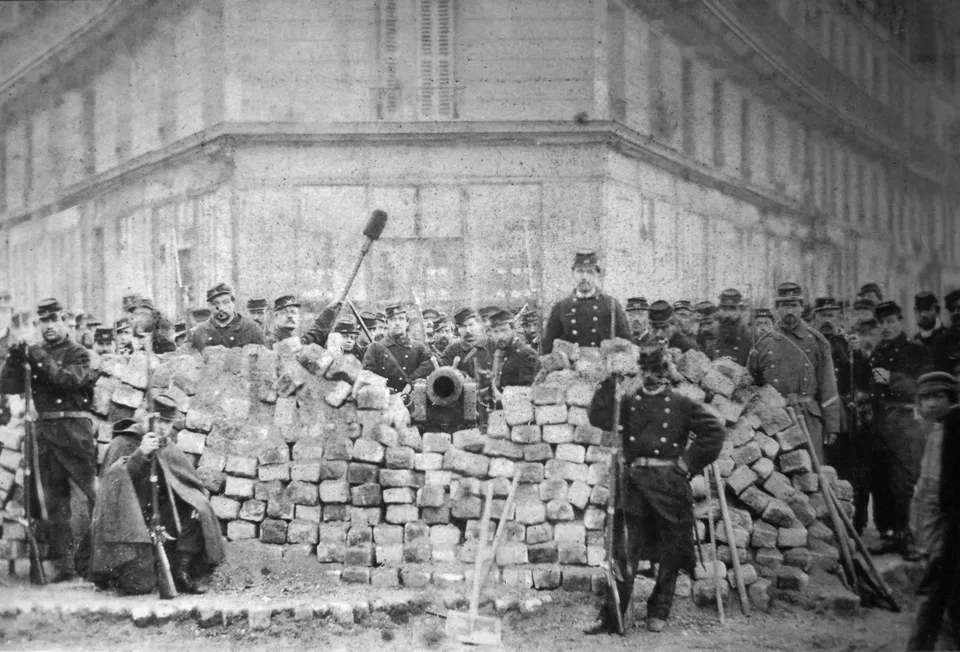
Bruno Braquehais · Public domain · Source
After the Franco-Prussian War, the royalist-majority assembly and Thiers’s government accepted a humiliating peace, angering Parisians who had endured a siege of over four months. On 18 March 1871 the government’s attempt to remove the National Guard’s cannon from Montmartre provoked resistance; the government withdrew to Versailles, and Parisians elected a Commune. It separated church and state and banned night work in bakeries, among other measures.
From 21 to 28 May government troops fought their way into Paris and crushed the Commune (the Bloody Week). Estimates of the dead range from several thousand to some 20,000, and many more were executed or deported. Marx hailed it as the first government of the working class, and it became a powerful symbol for later socialist movements.