Pansori
A performance in which a single singer weaves a long story through song, speech and gesture to a drummer’s beat. It arose in late Joseon, was edited by Sin Jae-hyo, and became Intangible Cultural Heritage of Humanity in 2003.
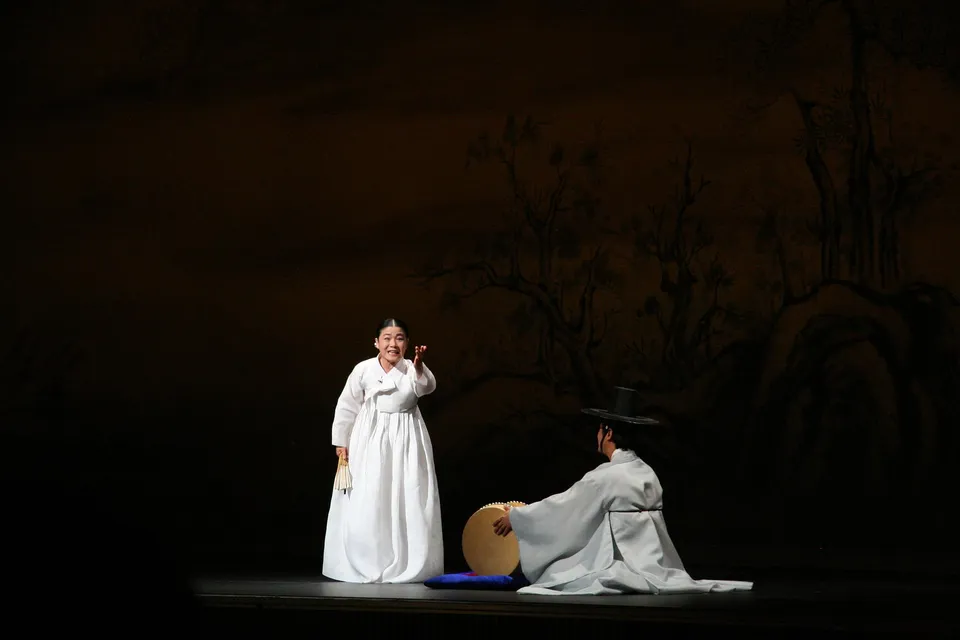
by bdnegin (Brian Negin) · CC BY-SA 3.0 · Source
Pansori arose around the 18th century, in late Joseon, centred on Jeolla Province. The singer unfolds the story through song (chang), spoken narration (aniri) and gesture (ballim or neoreumsae), while the drummer (gosu) keeps the rhythm on a barrel drum and calls out shouts of encouragement (chuimsae) such as "eolssigu". The audience joins in with chuimsae too, making it an open performance. First enjoyed by commoners, by the 19th century it was enjoyed by yangban and the court as well, and many famous master singers emerged.
In the late 19th century Sin Jae-hyo of Gochang edited the texts of six madang (Chunhyangga, Simcheongga, Heungboga, Sugungga, Jeokbyeokga and Byeongangsoega) and supported singers. Jin Chae-seon, whom he taught, is known as the first female master singer. Today five madang, all but Byeongangsoega, survive in performance. Pansori texts were also read as pansori novels such as The Tale of Chunhyang and The Tale of Sim Cheong.
It was designated Important Intangible Cultural Property in 1964 and proclaimed by UNESCO in 2003 (then as a "Masterpiece"), now Intangible Cultural Heritage of Humanity.