Odysseus and the Sirens
Also called: Sirens, Scylla and Charybdis
A legend handed down over the centuries.
A Greek myth told in Book 12 of the Odyssey. Sailing past the Sirens, whose song lures sailors to their death, Odysseus has his men stop their ears with wax while he, tied to the mast, listens to the song.
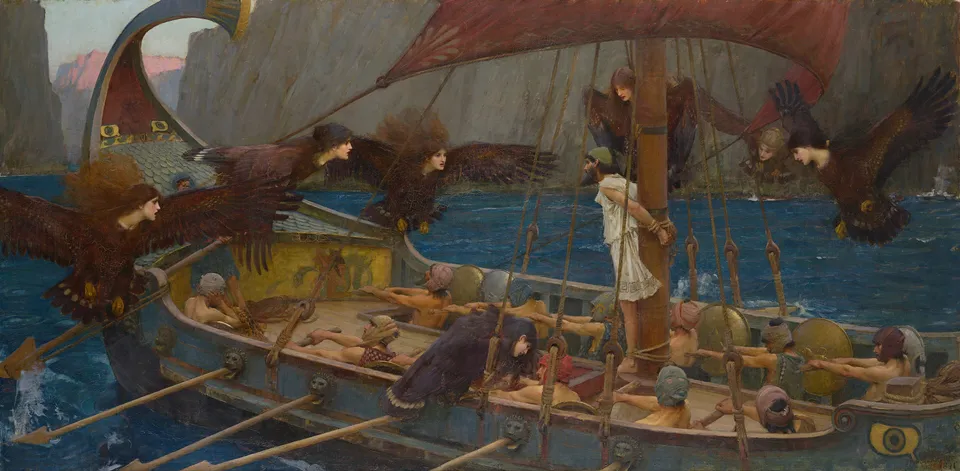
John William Waterhouse · Public domain · Source
This Greek myth is told in Book 12 of Homer’s Odyssey. Circe warned that sailors who heard the Sirens’ song were enchanted, drew near and perished, and that their bones lay heaped on the Sirens’ island. Odysseus had his men stop their ears with wax and, wanting to hear the song himself, had himself tied to the mast, ordering them to bind him tighter however much he begged to be freed. The Sirens sang that they would tell him all that had happened at Troy and everything on earth, but the ship passed safely by.
Homer does not describe what the Sirens looked like. Ancient Greek vases show them as birds with women’s heads; the fish-tailed mermaid image became fixed only from the Middle Ages. Afterwards the crew lost six men passing between Scylla and Charybdis, and when they ate the cattle of Helios on the island of Thrinacia their ship was wrecked in punishment and only Odysseus survived. The “siren” alarm takes its name from them.