The Move to Heijō-kyō and the Nara Period
Also called: Nara period, Kentōshi
In 710 Japan moved its capital to Heijō-kyō (Nara), laid out after Tang Chang’an, opening the Nara period. It was governed under the Taihō Code and took in Tang culture through envoys to the Tang court.
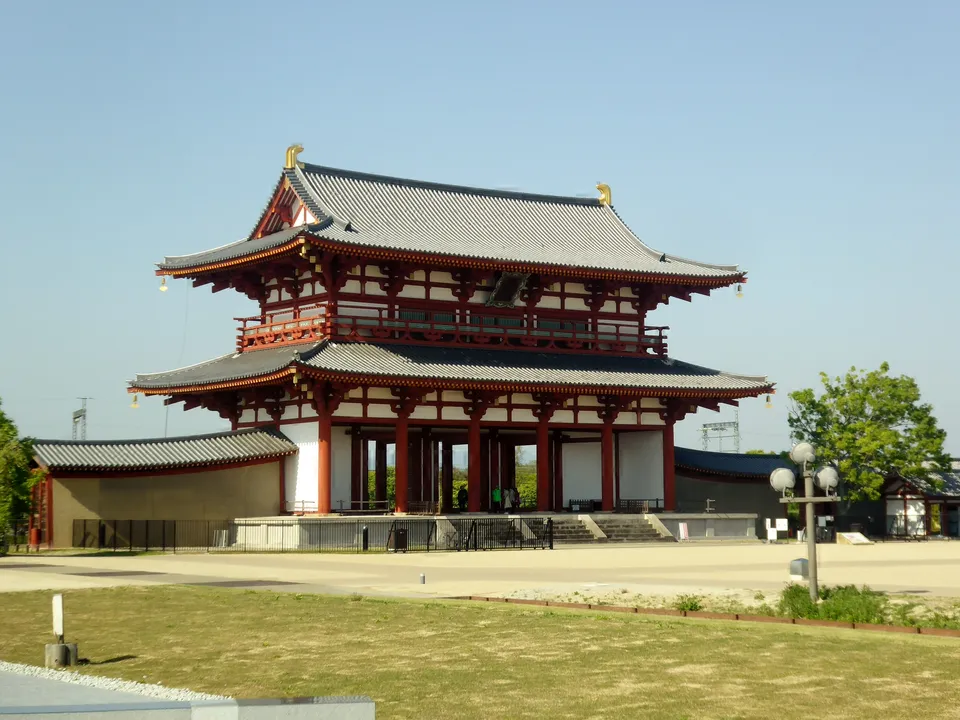
Tokumeigakarinoaoshima · CC BY-SA 4.0 · Source
Having issued the Taihō Code in 701, Japan moved its capital under Empress Genmei in 710 to Heijō-kyō, with a street grid and a grand central avenue (Suzaku Ōji). It minted the Wadō kaichin coin, compiled the histories Kojiki (712) and Nihon Shoki (720), and the poetry anthology Man’yōshū, written by borrowing Chinese characters for their sounds.
Through embassies to the Tang, sent from 630, students and monks brought back Tang institutions, Buddhism and culture. Emperor Shōmu ordered a provincial temple in every province and had the Great Buddha of Tōdai-ji cast, consecrated in 752. The Shōsōin, which holds Shōmu’s treasures, preserves objects from Tang, Silla and West Asia — and it was there that the Silla village registers were found. This cosmopolitan Buddhist culture is called Tenpyō culture. The move to Nagaoka-kyō in 784 ended the Nara period.