The Mayflower and the Mayflower Compact
Also called: Pilgrim Fathers, Plymouth Colony
Puritan “Pilgrims” fleeing persecution by the Church of England crossed to North America on the Mayflower and, before landing, pledged to form their own government and obey its laws.
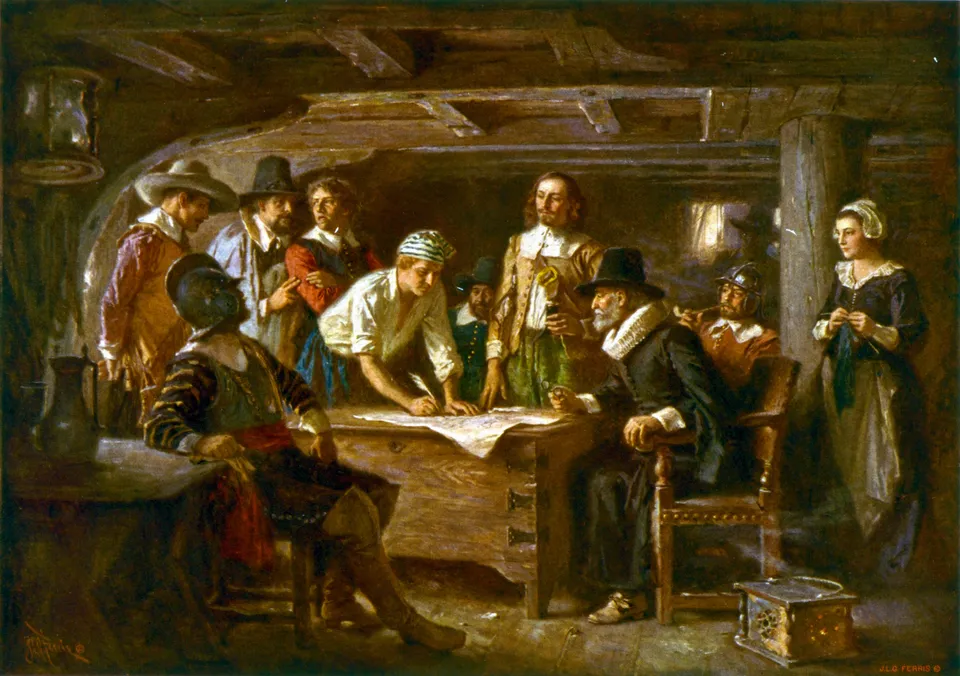
Jean Leon Gerome Ferris · Public domain · Source
Separatist Puritans who had broken with the Church of England fled persecution to Leiden in the Netherlands and then resolved to seek religious freedom in America. In September 1620 the Mayflower left Plymouth, England, with 102 passengers and in November reached Cape Cod. On board, 41 adult men signed the Mayflower Compact, forming a “civil body politic” and promising to obey just laws. Nearly half the settlers of their Plymouth Colony died in the first winter, but with the help of the Wampanoag they survived and held a harvest feast the next autumn — the origin of Thanksgiving.
From 1630 about a thousand Puritans led by John Winthrop founded the Massachusetts Bay Colony and the town of Boston. The New England colonies developed a tradition of self-government through town meetings and colonial assemblies that later underpinned the Revolution. At about the same time Gwanghaegun of Joseon was pursuing neutral diplomacy between the Ming and the Later Jin.