March Revolution and the Revolutions of 1848
Also called: Revolutions of 1848, Frankfurt Parliament, Springtime of Peoples
News of the February Revolution sparked the March revolutions in Vienna and Berlin, driving out Metternich and ending the Vienna system. The Frankfurt Parliament debated German unity, but the revolutions were eventually crushed.
Gbi.bytos · CC BY-SA 4.0 · Source
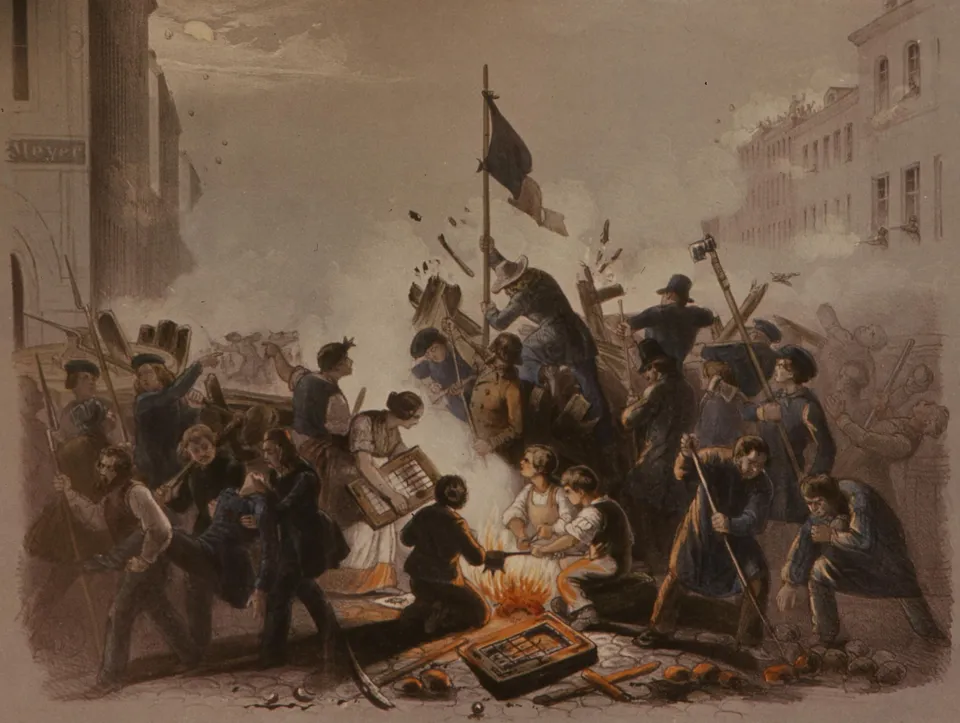
On 13 March 1848 students and citizens rose in Vienna and Metternich resigned and fled. On the 18th there was street fighting in Berlin, and King Frederick William IV of Prussia promised a constitution. National movements demanding self-rule or independence broke out in Hungary, Bohemia and Italy — the “Springtime of Peoples”.
The Frankfurt National Assembly, meeting from May with delegates from across Germany, quarrelled over whether to include Austria (Greater Germany) or exclude it (Lesser Germany). It drafted a Lesser German constitution and in 1849 offered the imperial crown to the King of Prussia, who refused. With Russian help Austria crushed the Hungarian revolution, and by 1849 conservative forces had suppressed the revolutions everywhere.
The revolutions failed, but the Vienna system was finished and some changes remained, such as the abolition of serfdom in Austria. Because the liberals had failed to unite the nation, German and Italian unification would instead be achieved by force by kingdoms such as Prussia and Sardinia.