Royal Ancestral Rite and Music at Jongmyo
Also called: Jongmyo Jeryeak, Jongmyo Jerye
The rite held at Jongmyo for the royal ancestors and the music, songs and dances that accompany it. Botaepyeong and Jeongdaeeop, composed under King Sejong, were adopted for the rite under King Sejo.
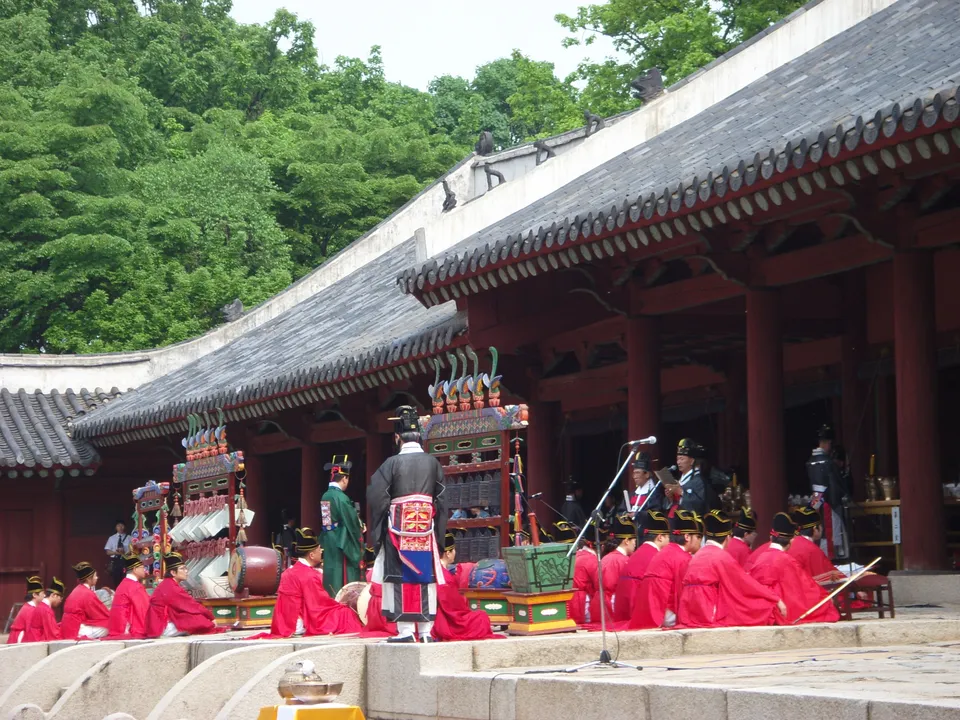
The Jongmyo rite was the greatest state sacrifice of Joseon, offered at Jongmyo to the royal ancestors. Each stage of the rite is accompanied by instrumental music, songs (akjang) and dance (ilmu), together called Jongmyo Jeryeak. Percussion such as bronze bells (pyeonjong) and stone chimes (pyeongyeong) joins wind and string instruments, and the line dance is divided into the civil dance, with flute-like yak and pheasant-feather jeok, and the military dance, with wooden swords and spears.
Its core suites, Botaepyeong and Jeongdaeeop, were composed by King Sejong: Botaepyeong praises the ancestors’ civil virtue, Jeongdaeeop their military achievements. First used at court banquets, they were adopted for the Jongmyo rite by King Sejo in 1464 (10th year of his reign) and are still played today. Sejong also devised jeonggan-bo, a notation that could record the length of notes.
Jongmyo Jeryeak was designated Important Intangible Cultural Property No. 1 in 1964, and in 2001, with the Jongmyo rite, it became Korea’s first entry among UNESCO’s Masterpieces of the Oral and Intangible Heritage of Humanity (now Intangible Cultural Heritage of Humanity). The grand rite is still held every year on the first Sunday of May.