Conflict1274 · 1281

Goryeo-Yuan Invasions of Japan

The Yuan, using Goryeo as its spearhead, twice invaded Japan, and both times its fleets were wrecked by storms. Supplying ships, troops and grain placed a heavy burden on Goryeo.
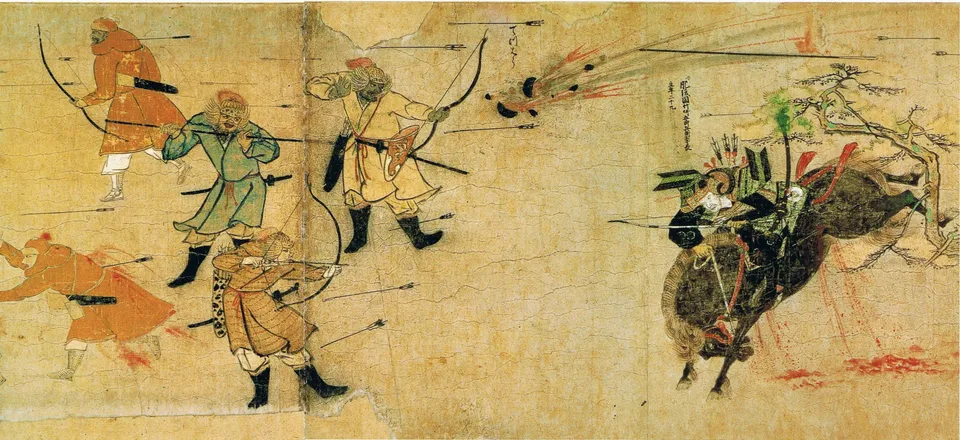
Mōko Shūrai Ekotoba — a Japanese samurai fighting the Mongol-Goryeo army in 1274, late 13th-century scroll

Unknown (commissioned by Takezaki Suenaga) · Public domain · Source

In 1274 some 30,000 Yuan and Goryeo troops, the Goryeo contingent under Kim Bang-gyeong, sailed in about 900 Goryeo-built ships via Tsushima and Iki to Hakata Bay but withdrew in a storm. In 1281 an Eastern Route Army from Goryeo and a Southern Army from Jiangnan, some 140,000 men in all, were again wrecked by a typhoon — the "divine wind" (kamikaze) of Japanese tradition.

The map in 1274

OpenFreeMap © OpenMapTiles © OpenStreetMap contributors

States and rulers at the time
Yuan · invader — Kublai Khan (Shizu)
Goryeo · allied force — King Chungnyeol
Japan · invaded

People

  • Kublai Khan (Emperor Shizu of Yuan)1215 – 1294

    monarch · Fifth Great Khan and founder of the Yuan dynasty, who made peace with Goryeo and launched the invasions of Japan

  • King Chungnyeol1236 – 1308

    monarch · Twenty-fifth king of Goryeo and the first to marry a Yuan princess; Goryeo was drawn into the invasions of Japan

Before and after

Themes that include this event

  • Song, Ming and Samurai JapanAD 960 – 1500

    The age when the civil-minded Song bought peace from Liao, Western Xia and Jin while the lower Yangtze boomed and Neo-Confucianism took shape, and the Ming, having driven out the Yuan, rebuilt the East Asian order through imperial autocracy, the sea ban and tribute — as Japan passed through the Kamakura and Muromachi warrior governments into the Warring States era, and Korea from Goryeo to Joseon

  • The Mongol Conquests1206 – 1294

    From the rise of Genghis Khan to the Yuan conquest of the Song — eighty years in which the Mongols swept Eurasia from Goryeo to Hungary