Hades and Persephone
Also called: Rape of Persephone, Abduction of Persephone, Proserpina
A legend handed down over the centuries.
A Greek myth told in the Homeric Hymn to Demeter. When Hades, god of the underworld, carried off Demeter’s daughter Persephone, Demeter searched for her and, staying at Eleusis, kept the grain from growing. In the end Persephone was to spend part of each year in the underworld.
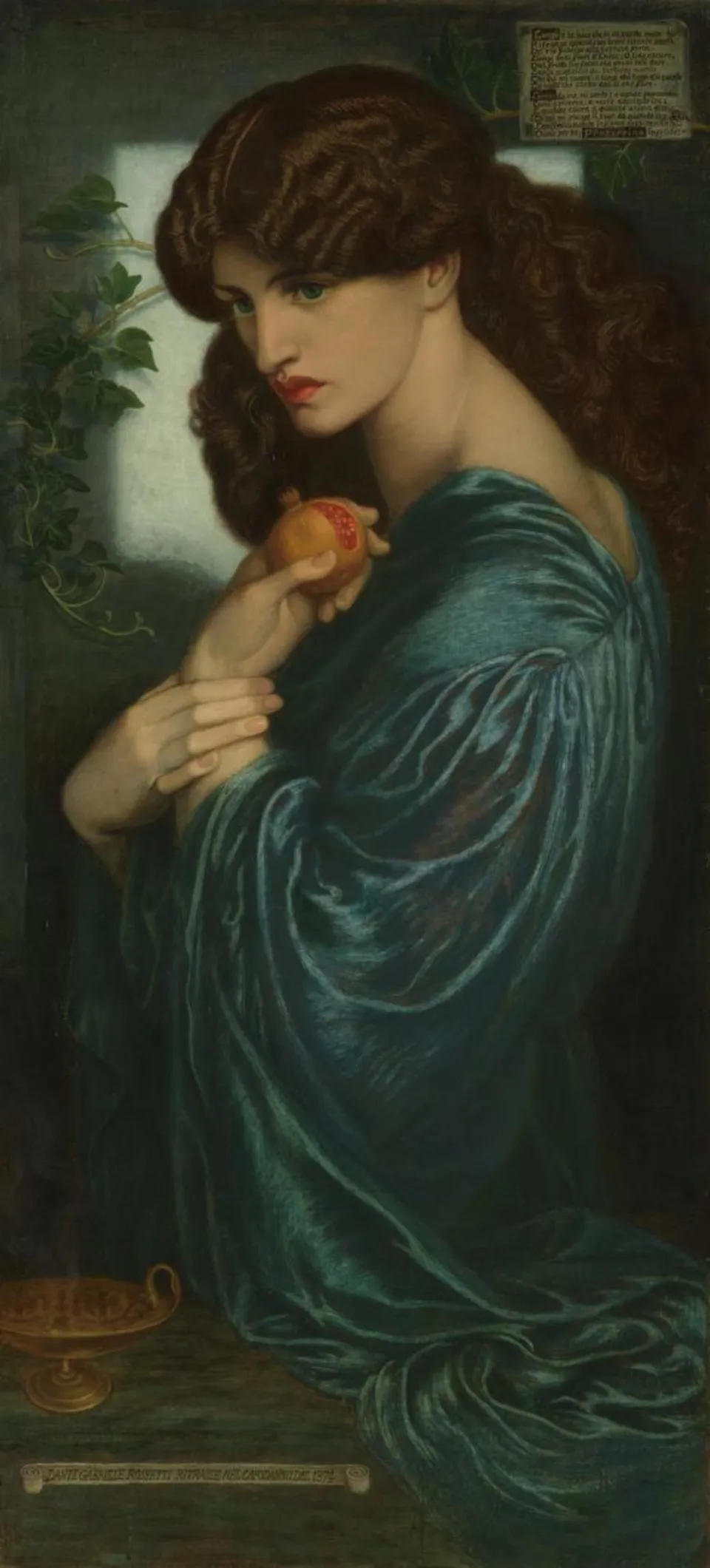
Dante Gabriel Rossetti · Public domain · Source
This Greek myth is told in the Hymn to Demeter (Homeric Hymn 2) of about the 7th–6th century BC, and retold in Roman form in Book 5 of Ovid’s Metamorphoses. As Persephone was picking flowers in a meadow, the earth opened and Hades drove out in a golden chariot and carried her off to the underworld, with Zeus’ prior consent. Demeter searched the whole earth for nine days with torches in her hands, and then, disguised as an old woman, stayed in the house of Celeus, king of Eleusis.
When the people of Eleusis built her a temple, the goddess shut herself in it and let no grain grow. As people starved and the gods received no sacrifices, Zeus sent Hermes to bring Persephone back. But because she had eaten pomegranate seeds in the underworld, she was to spend a third of each year with Hades and the rest with her mother. The hymn ends with Demeter teaching her Mysteries to the lords of Eleusis. The story is often read as an explanation of the seasons.