Religion590–604

Gregory the Great and the Rise of the Papacy

Pope Gregory I protected Rome from the Lombards and sent missionaries to the Anglo-Saxons, laying the foundations for the Roman Church to become the spiritual centre of Western Europe.
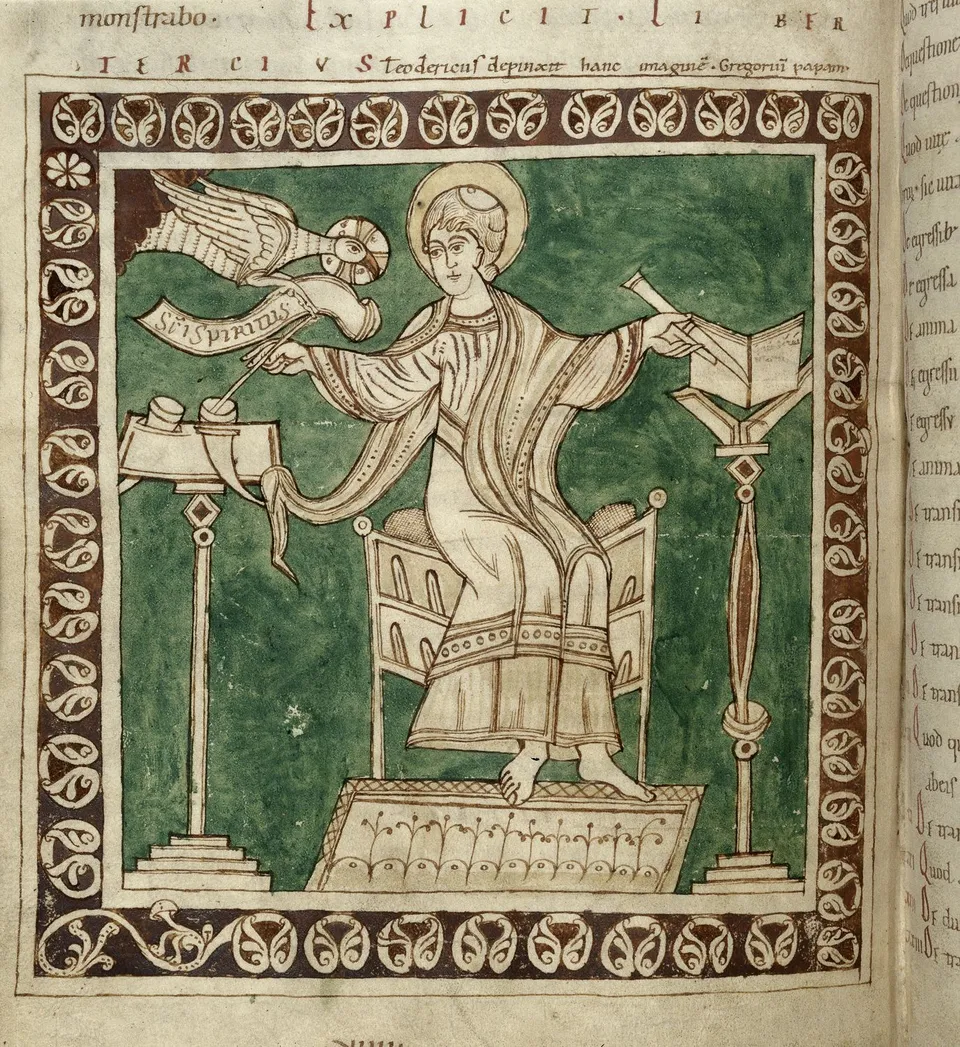
Gregory the Great writing, inspired by the Holy Spirit as a dove — miniature in an early 12th-century manuscript, British Library

British Library · CC0 · Source

Elected pope in 590, Gregory I negotiated directly with the Lombards to protect Rome, beyond the reach of the Byzantine emperor, and fed its starving citizens. In 597 he sent the monk Augustine to England to lead the conversion of the Anglo-Saxons. The idea that the bishop of Rome, as Peter’s successor, was head of the Church gained strength, and the Roman Church drew closer to the Germanic kingdoms than to Byzantium. Gregorian chant takes its name from him. At this time Sui had reunified China (589) and Goguryeo was facing Sui.

The map in AD 590

OpenFreeMap © OpenMapTiles © OpenStreetMap contributors

States at the time
Kingdom of the Lombards
Anglo-Saxon kingdoms
Places
Rome

People

  • Pope Gregory IAD 604

    leader · Pope (590–604) who defended Rome by negotiating with the Lombards and sent missionaries to the Anglo-Saxons, laying the foundations of papal power

Before and after

Themes that include this event

  • Medieval Europe and ByzantiumAD 476 – 1077

    From the fall of Rome in the West to Canossa — the feudal West built by the Franks and the papacy, Byzantium as heir of Rome, and a church divided east and west