Government-General of Korea and Military Rule
Japan set up the Government-General of Korea and ruled through the military police. Governors-General were drawn from army and navy generals and admirals.
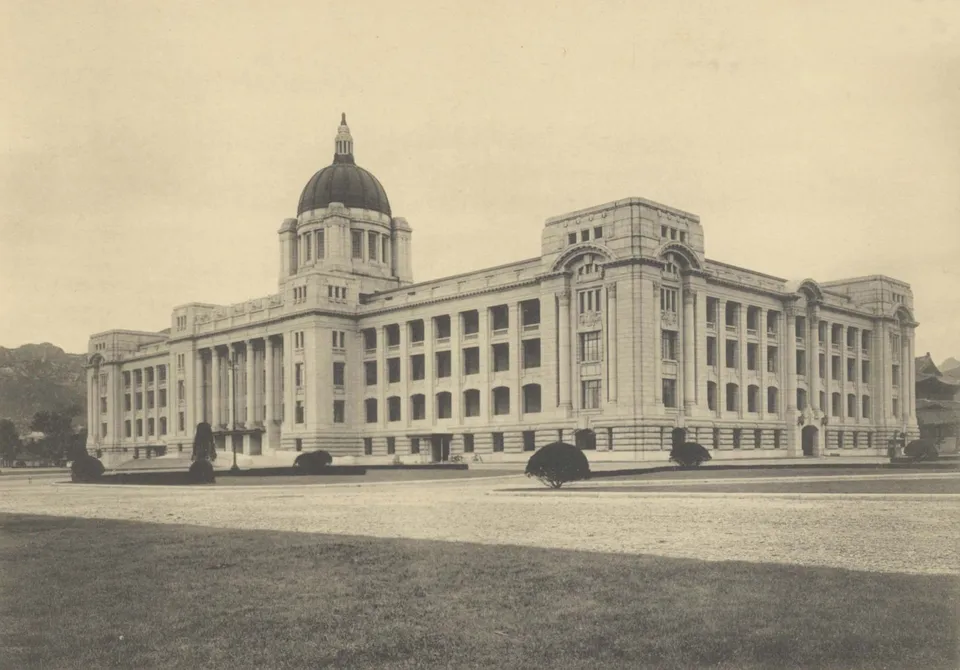
門田房太郞 · Public domain · Source
Established on 1 October 1910, the Governor-General answered directly to the emperor and held legislative, executive and judicial power as well as command of the troops. The Jungchuwon was merely an advisory body of collaborators. Under the military police system, gendarmes did police work and could impose fines, detention or flogging without trial (Summary Punishment Ordinance); the 1912 Flogging Ordinance applied to Koreans only. Even officials and teachers wore uniforms and swords.
Freedom of the press, assembly and association was abolished, newspapers were closed and groups such as the Sinminhoe dissolved. The First Korean Education Ordinance (1911) cut common schools to four years of Japanese-language and vocational schooling "suited to the level of the people", while the private-school and seodang regulations suppressed national education.