East German Uprising of 17 June 1953
Also called: Uprising of 1953 in East Germany, Volksaufstand
A strike by East Berlin construction workers spread into an uprising across East Germany. Soviet tanks crushed it, and West Germany commemorated 17 June as the “Day of German Unity”.
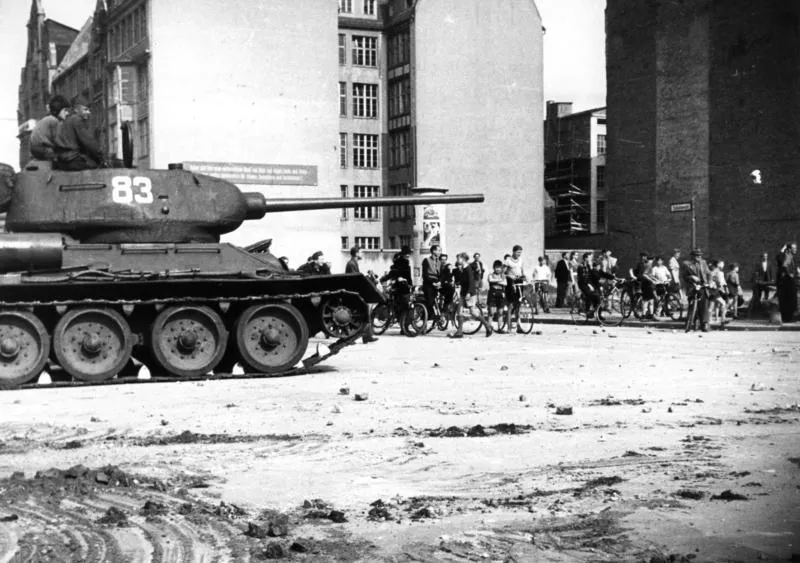
Bundesarchiv, B 145 Bild-F005191-0040 / o. Ang. · CC BY-SA 3.0 de · Source
Even after Stalin’s death the East German government refused to withdraw a 10 per cent increase in work quotas. On 16 June 1953 construction workers on East Berlin’s Stalinallee downed tools and marched, and on the 17th more than a million people struck and demonstrated in some 700 places across the country. Their demands grew from scrapping the quotas to the government’s resignation and free elections.
Soviet forces declared martial law and sent in tanks to crush the rising. Some 55 deaths have been documented and more than 10,000 people were arrested; Ulbricht emerged with his power strengthened. From the following year until 1990 West Germany kept 17 June as a public holiday, the “Day of German Unity”.