Zeus, Poseidon and Hades Divide the World
Also called: Twelve Olympians, Dodekatheon
A legend handed down over the centuries.
A Greek myth told in Book 15 of Homer’s Iliad. After defeating the Titans, the three sons of Cronus cast lots: Zeus won the sky, Poseidon the sea and Hades the underworld, while the earth and Olympus were shared by all.
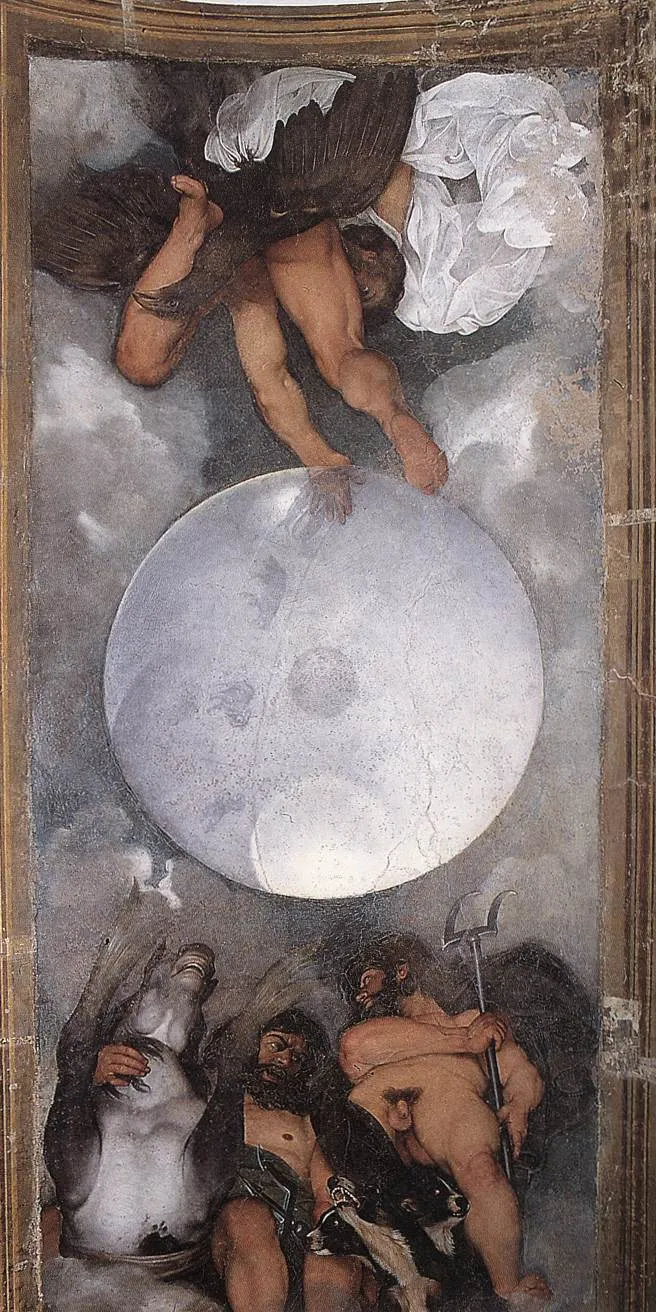
Caravaggio · Public domain · Source
This Greek myth is told by Poseidon himself in Book 15 of Homer’s Iliad. The three sons of Cronus divided the world by lot: Zeus received the wide sky, Poseidon the grey sea and Hades the murky underworld, while the earth and lofty Olympus remained common to all three. Poseidon therefore resists Zeus’ orders, saying they are brothers of equal portion. Apollodorus’ Library tells of the same casting of lots, but Hesiod’s Theogony says only that the gods asked Zeus to be their king.
The gods who settled on Mount Olympus are the “Olympian gods”. The usual later list of twelve is Zeus, Hera, Poseidon, Demeter, Athena, Apollo, Artemis, Ares, Aphrodite, Hephaestus, Hermes and Hestia (or Dionysus); Hades, dwelling below, is not normally counted among them. The list of twelve varied somewhat by period and place.