Boston Tea Party
Also called: Destruction of the Tea
When Britain gave the East India Company a monopoly on selling tea in the colonies, Boston colonists disguised as Native Americans dumped the tea from ships in the harbour into the sea.
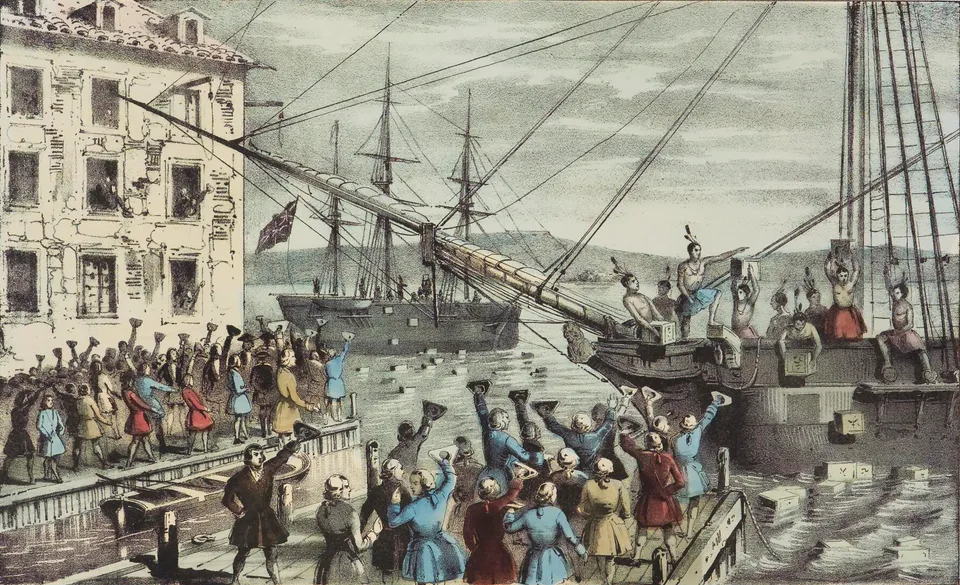
Nathaniel Currier · Public domain · Source
After the French and Indian War Britain taxed the colonies through the Stamp Act (1765) and the Townshend Acts (1767), and the colonists resisted with boycotts of British goods under the slogan “No taxation without representation.” After the Boston Massacre of 1770 Britain repealed the duties except the one on tea, but when the Tea Act of 1773 let the East India Company sell tea directly and cheaply in the colonies, colonists saw it as a ploy to make them accept Parliament’s right to tax.
On the night of 16 December 1773, Samuel Adams’s Sons of Liberty, disguised as Mohawks, boarded three ships and threw more than 340 chests of tea into the harbour. Britain replied in 1774 with the Coercive (Intolerable) Acts, closing the port of Boston and curtailing self-government in Massachusetts. Colonial delegates then met at Philadelphia in the First Continental Congress and agreed to resist together. Joseon was in the last years of Yeongjo’s reign; three years later Jeongjo came to the throne.