ConflictJuly 612(Lunar)

Battle of Salsu River

Goguryeo forces under Eulji Mundeok routed a Sui strike force at the Salsu (Cheongcheon) River.
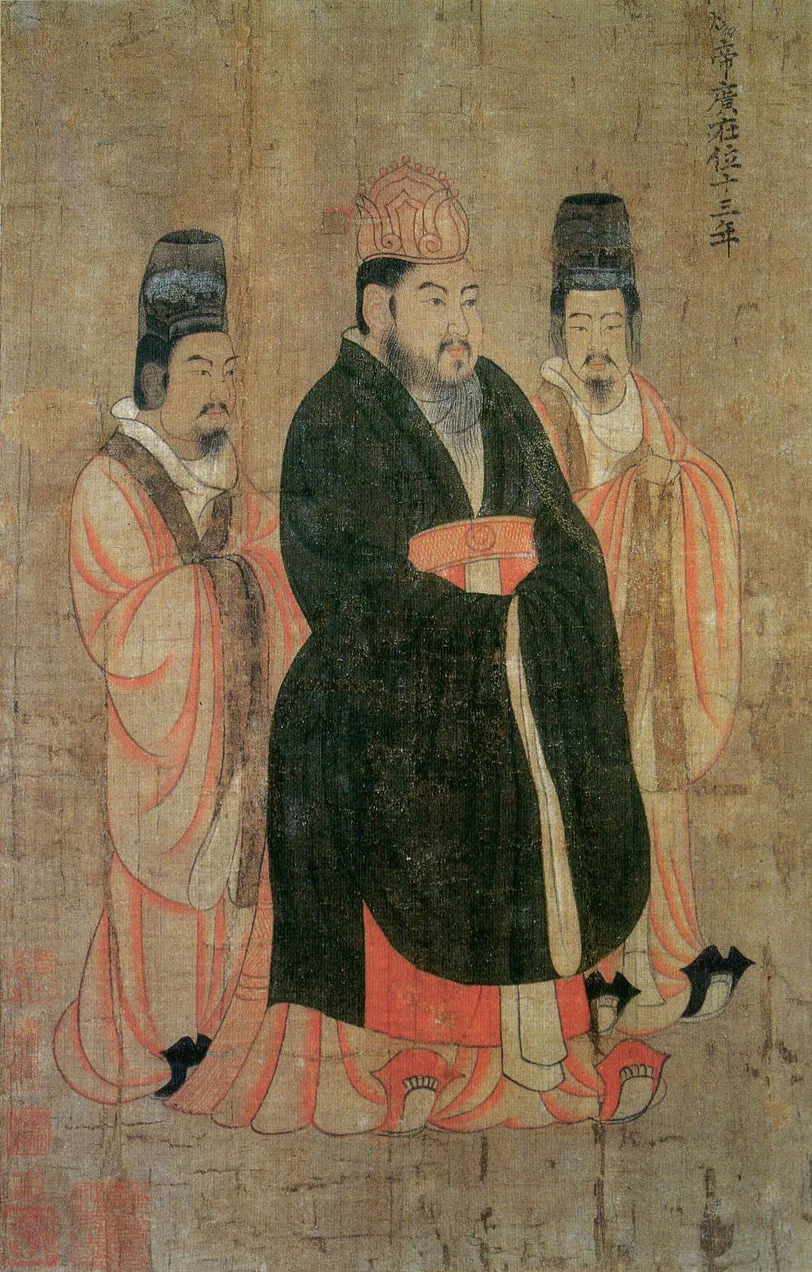
Emperor Yang of Sui, who led the 612 invasion of Goguryeo — Yan Liben, Thirteen Emperors Scroll

Yan Liben · Public domain · Source

Emperor Yang invaded with 1.13 million men. When Liaodong Fortress held, a strike force of some 300,000 under Yu Zhongwen and Yuwen Shu marched on Pyongyang. Eulji Mundeok drew it in with feigned defeats and sent Yu a poem: "Your merit is already great; be content and stop." As the exhausted army crossed the Salsu in retreat, Goguryeo struck; only 2,700 men are said to have returned.

The map in AD 612

OpenFreeMap © OpenMapTiles © OpenStreetMap contributors

States and rulers at the time
Goguryeo · victor — King Yeongyang
Sui · invader — Emperor Yang
Places
Salsu River (Cheongcheon)

People

  • Eulji Mundeok

    commander · Goguryeo general who lured the Sui strike force inland and destroyed it at the Salsu River

  • King YeongyangAD 618

    monarch · Twenty-sixth king of Goguryeo, who struck Liaoxi and repelled the Sui invasions

  • Emperor Yang of SuiAD 569 – AD 618

    monarch · Second Sui emperor whose three invasions of Goguryeo failed

Before and after

Related works

Themes that include this event

  • Wars of Korean UnificationAD 598 – AD 676

    From Goguryeo's wars with Sui and Tang to Silla's unification — eighty years of East Asian war on the peninsula

  • Sui, Tang and the East Asian WorldAD 317 – AD 979

    From the divided Southern and Northern Dynasties and the Gupta age through the Sui and Tang empires to the founding of the Song — the age when an East Asian world sharing law codes, Buddhism, Confucianism and Chinese characters took shape, and Korea and Japan built their states on its model