Apollo and Python
Also called: Python, Pytho, Homeric Hymn to Apollo
A legend handed down over the centuries.
A Greek myth told in the Homeric Hymn to Apollo. Apollo shot the great serpent (Python) that guarded the spring at Delphi and founded his oracle on the spot. The name of the Delphic priestess, the Pythia, comes from this story.
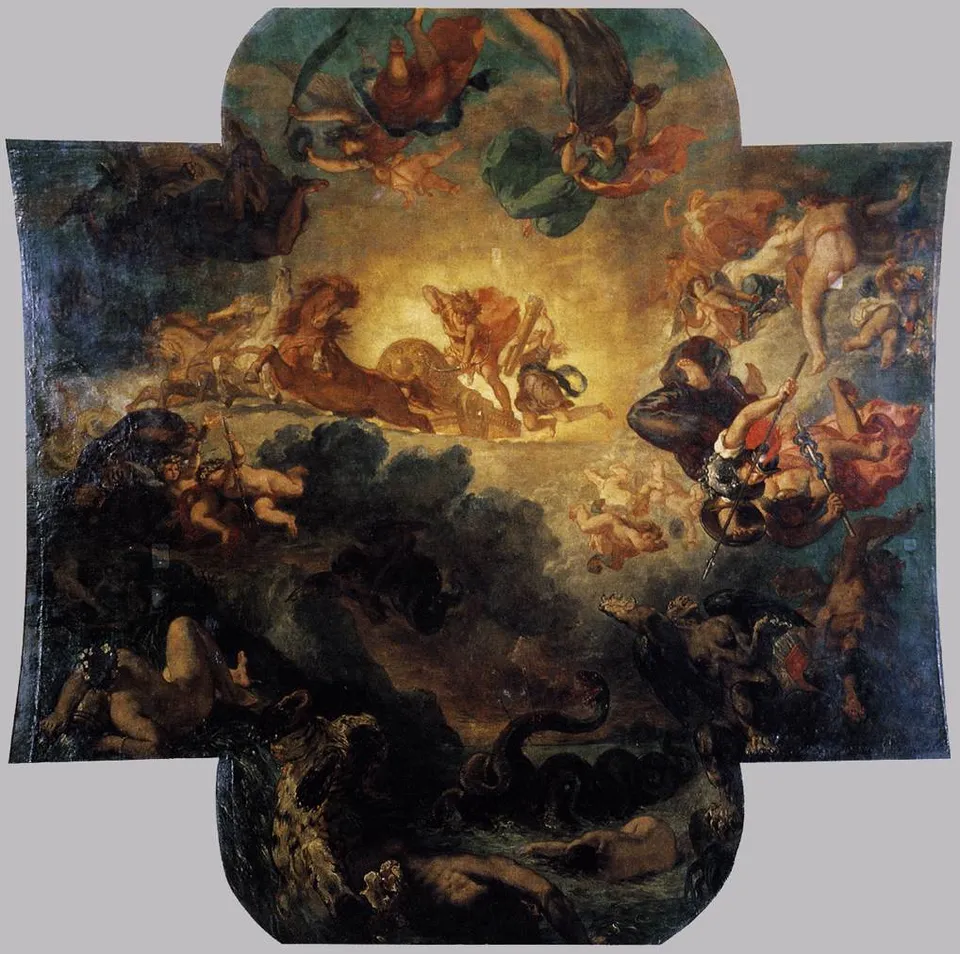
Eugène Delacroix · Public domain · Source
This Greek myth is told in the Hymn to Apollo (Homeric Hymn 3) of about the 6th century BC, and retold in Book 1 of Ovid’s Metamorphoses and elsewhere. Seeking a place for his oracle, Apollo came to the slope of Crisa below Mount Parnassus and laid the foundations of his temple. A great she-serpent that preyed on people and flocks lived by the spring there; Apollo shot her with his arrows and her body rotted (Greek pythein) in the sun. Hence, the hymn explains, the place was called Pytho and Apollo Pythios.
Later writers name the serpent Python, son of Gaia, and say Delphi had first been the oracle of the earth goddess Gaia (or Themis) before Apollo took it over. The Pythian Games, held every four years, were also said to celebrate Apollo’s victory over Python. The hymn also tells how Apollo, in the form of a dolphin, guided a ship of Cretans to Delphi to be his first priests.