Aeneas in Latium and the Founding of Lavinium
Also called: Lavinia, Turnus, King Latinus
A legend handed down over the centuries.
A Roman founding legend told in Books 7–12 of the Aeneid and Book 1 of Livy’s History of Rome. Reaching the mouth of the Tiber, Aeneas was promised Lavinia, daughter of Latinus, king of the Latins; after defeating Turnus, king of the Rutuli, who had been betrothed to her, he founded the town of Lavinium, named after his wife.
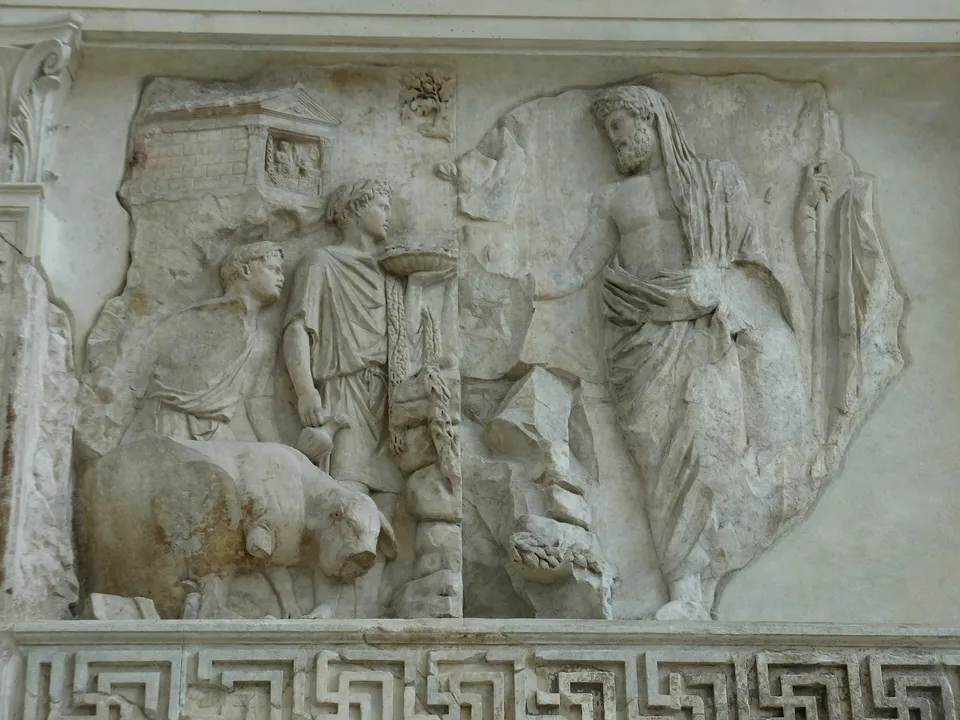
Amphipolis · CC BY-SA 2.0 · Source
This Roman founding legend is told in Books 7–12 of Virgil’s Aeneid, Book 1 of Livy’s History of Rome and the Roman Antiquities of Dionysius of Halicarnassus. Reaching Italy by way of Sicily, Aeneas is guided by the Sibyl of Cumae into the underworld, where the ghost of his father Anchises shows him Rome’s future, from Romulus to Augustus (Book 6). At the mouth of the Tiber, the old Latin king Latinus, obeying an oracle that told him to accept a son-in-law from abroad, agrees to give him his daughter Lavinia.
Turnus, king of the Rutuli, who had been betrothed to Lavinia, goes to war at Juno’s urging, and the Aeneid ends with Aeneas killing Turnus. According to Livy and Dionysius, Aeneas founded Lavinium, named after his wife, and installed there the Penates brought from Troy. In a later battle he vanished beside the river Numicus and was worshipped as a god (Jupiter Indiges).
Roman consuls and senior magistrates went to Lavinium on taking office to sacrifice to the Penates and Vesta. The story of Aeneas coming to Italy is already found in Greek writers of the 5th century BC, but there is no evidence that it happened. Here it is placed as a legend attached to the real sanctuary of Lavinium, dated a few years after the fall of Troy as tradition has it.